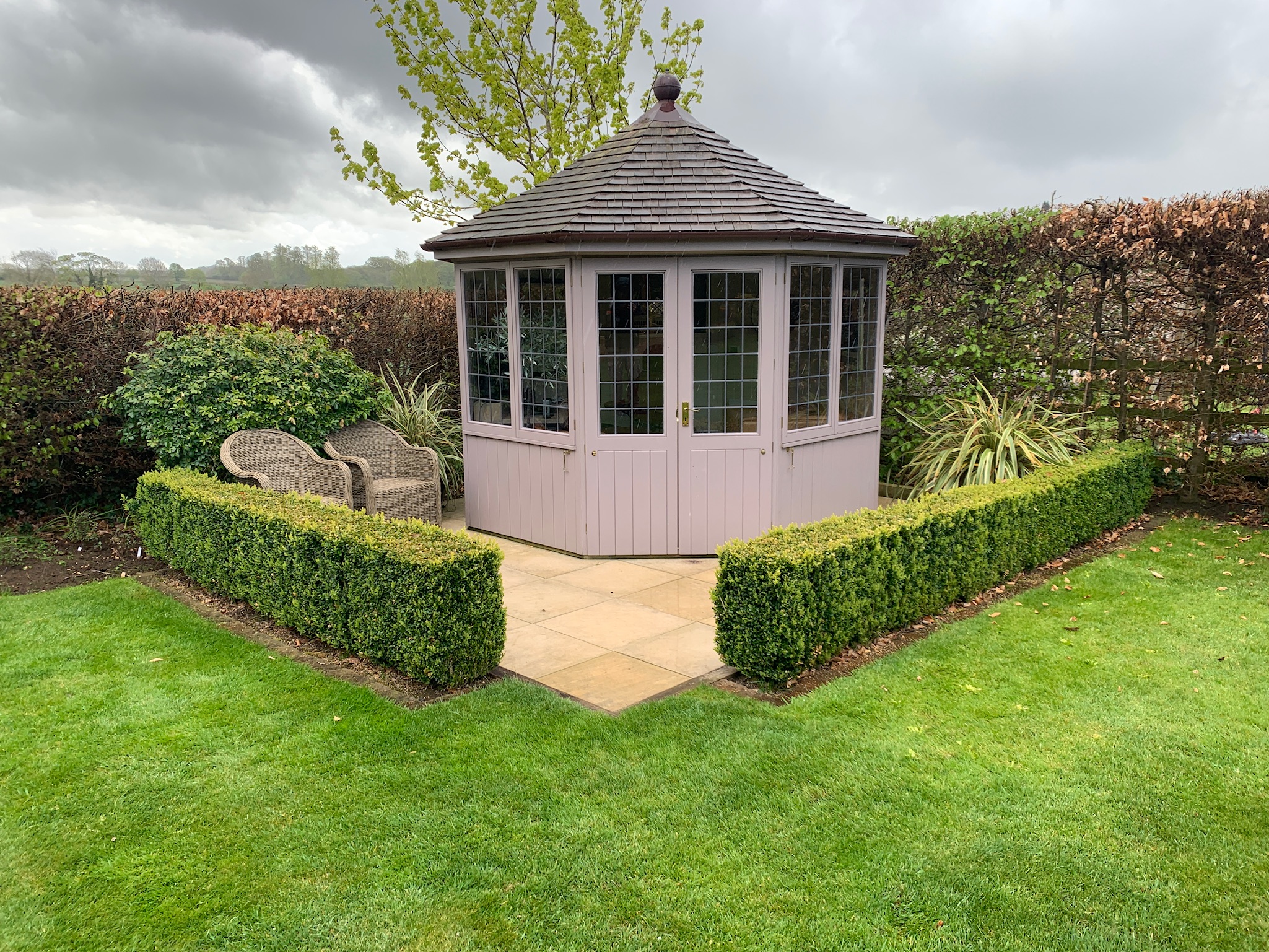
Box Hedging: Where Low, Formal Structure Still Wins
Mature box hedging gives you something young plants cannot: an established form and a line you can see from day one. It is the formal, structural choice for low boundaries, parterres and clipped garden shapes, not usually the first choice when the main aim is a fast, tall privacy screen. Here’s what to consider when specifying box, and what to ask before enquiring about mature plants.
What does a mature box hedge add to a garden?
Box is a dense, slow-growing evergreen that clips well and holds a neat formal line. Its close texture suits designs where the outline matters: an edge to a path or bed, a low boundary around a seating area, or the geometry of a knot garden or parterre.
Choosing mature hedging brings established form to the scheme straight away, rather than asking small plants to fill out over time. The exact effect depends on the plants and the layout, so check the dimensions and condition of the stock you are considering against your design.

When is box a better fit than laurel?
The choice comes down to the job the hedge needs to do. Box is well suited to low, closely clipped structure. Laurel and Portuguese laurel are often considered when the brief calls for fuller, taller screening. All three need care; the desired shape and setting affect how much trimming is needed.
| Plant | Growth habit | Often suited to | Maintenance expectation |
|---|---|---|---|
| Box | Dense, compact and slow-growing; clips into a tight line | Low boundaries, edging, parterres and topiary | Regular trimming to keep a precise shape |
| Laurel | Larger-leaved and more substantial in appearance | Fuller screening and taller boundaries | Trimming to manage size and maintain the desired outline |
| Portuguese laurel | Larger-leaved evergreen with a formal appearance | Screening and structured boundaries | Trimming to maintain the chosen size and form |
This is a guide, not a substitute for checking specific plants and site conditions. If privacy is the priority, compare the available height and density of the stock with the screening you need. If the priority is a crisp, low edge, box may be the more natural fit.
What mature box hedging and topiary can you enquire about?
Hedgeforce supplies mature box hedging and box topiary through its instant hedging and ex-rental stock. The wider stock range includes laurel and Portuguese laurel, as well as semi-mature trees and statement topiary. Available plants and dimensions vary, so ask us to confirm what is currently available rather than designing around an assumed stock list.
Box topiary can add a focal point beside an entrance, along a path or within a formal planting scheme. A low hedge and a shaped specimen can also work together, giving a design a consistent clipped character without relying on a single long boundary.

Browse our hedges stock and topiary pages to see the relevant ranges. They are a starting point for an enquiry, not confirmation that a particular plant is available.
How should you plan a low boundary or parterre?
A little practical planning makes it easier to identify suitable plants and spot issues before delivery. Before enquiring:
- Measure the full line. Note the total length, any corners and gaps for gates or paths. For a parterre, prepare a simple plan showing the pattern and dimensions of each section.
- Decide the intended height and width. A low hedge can define space without becoming a visual barrier, but it still needs to work with the scale of nearby paths, beds and seating.
- Check sightlines. Consider views across the garden, from windows and along paths. Keep access and movement through the space in mind.
- Allow room for trimming. A clipped hedge needs to be reachable for maintenance. Consider access to both sides where the design requires it.
- Think about the ground. Box needs reasonable drainage. Note any areas where water tends to collect and discuss the site conditions when you enquire.
- Check delivery access. Share any restrictions on vehicle access, unloading or moving plants from the drop-off point to their final position.
These details help us understand the scheme and discuss whether the mature stock being considered is a suitable match.
What should you check on the plants before you buy?
Mature plants are individual living things, not uniform building materials. Before committing, ask about the condition and history of the specific stock, including how it has been maintained and whether its shape and density suit the role you have in mind. If possible, assess the plants themselves or request current information that helps you make an informed decision.
It is also worth confirming the actual dimensions, how the plants will be supplied, and what is involved in lifting, transporting and planting them. Box is not problem-free; a clear understanding of the stock’s condition and care history is more useful than assuming every mature plant will behave the same way.
Our ex-rental stock may include plants that have previously been used in event or production hire. Hedgeforce maintains and reuses its hire stock; when plants come out of hire, they can be sold for a permanent garden or landscape scheme. Ask about the history of the particular plants you are considering.
What does the first season after installation involve?
Newly installed mature plants need watering while they establish. Plan how this will be managed, especially if the hedge is in a sunny or exposed position, and make sure there is practical access to water. Avoid assuming that a mature appearance means a plant needs no aftercare.
Box also needs consistent trimming to retain its formal shape. The timing and approach should suit the specific plants and conditions. Our mature instant hedge maintenance guide covers general aftercare; discuss questions about individual stock before planting.
Can box work in a hire or event setting?
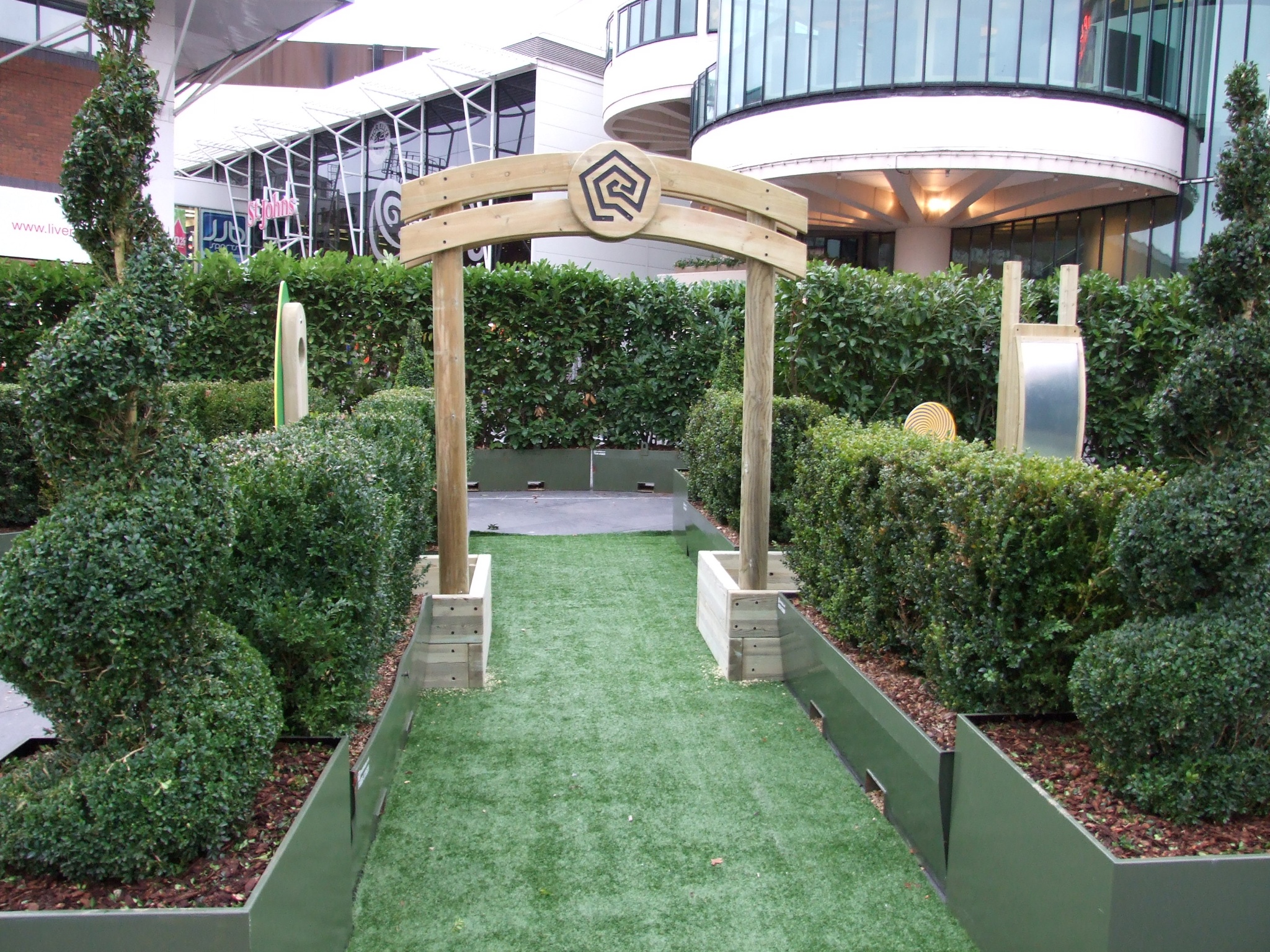
Low box can be considered where a temporary layout needs a defined edge or formal accent rather than a tall privacy barrier. For an event, the brief also needs to account for audience movement, access and the installation window. Talk to your supplier about whether the plants and layout suit the venue and how watering and care will be managed during the hire period.
Hedgeforce has been established since 2004 and is based at Bocase Farm, Brigstock, Northamptonshire, with nationwide delivery. Our living plants are used in hire and production settings; when plants leave that stock, some can move on to permanent garden and landscape projects.
Enquire about mature box stock
If you are specifying a box boundary, parterre or topiary feature, send us your measurements, location and preferred height. We can check what mature box stock is available and discuss delivery for your scheme.
Start with the hedges stock page and request a quotation.
